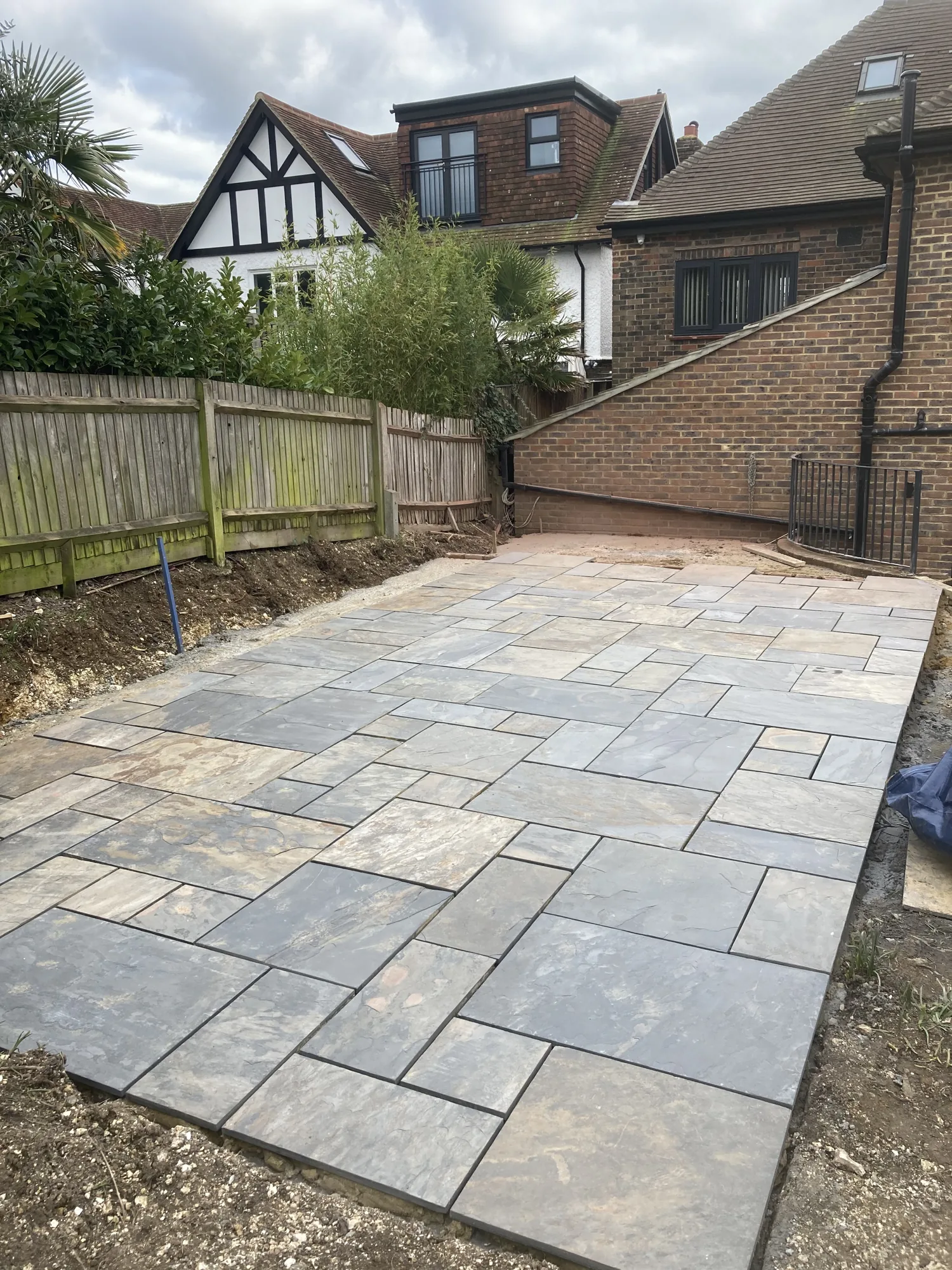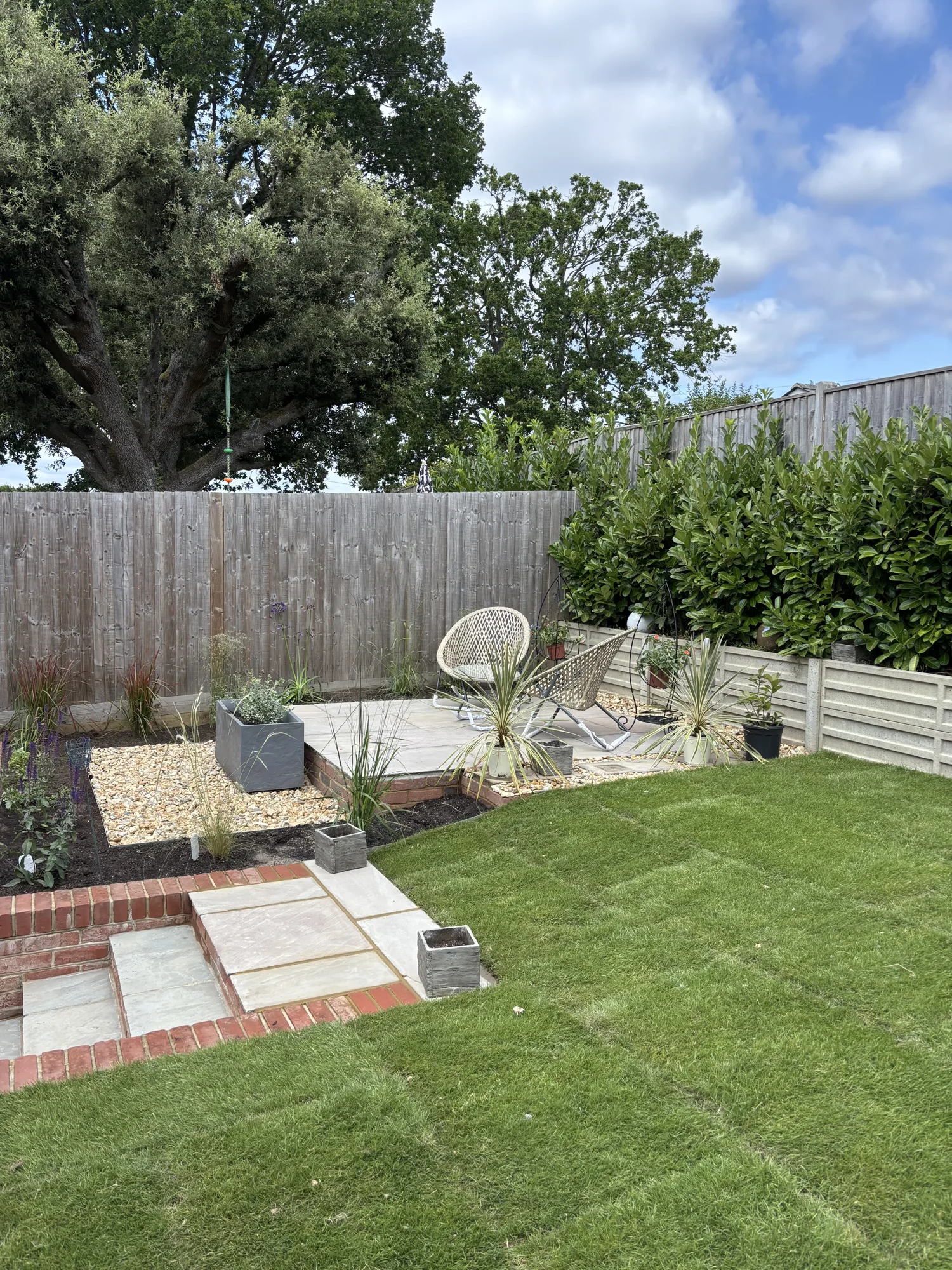
A complete garden transformation combines elements like patios, walls, steps, paths and drainage into one finished space rather than separate jobs. Costs vary widely with size, access, ground conditions and materials, and smaller landscaping projects often start from around £5,000. Good planning around levels, drainage and how you want to use the garden makes the biggest difference to the result.
A garden transformation is a chance to rethink your whole outdoor space rather than fix one part of it. Instead of a new patio one year and a wall the next, everything is planned and built together: the levels, the paving, the steps, the paths, the planting, and the drainage that holds it all together. This guide walks you through how to plan a complete garden transformation in Brighton, Hove and across East Sussex, from the groundwork up to the finishing materials.
Why Transform the Whole Garden at Once
Gardens are often built up in pieces over many years, which is why so many feel disjointed. Doing everything as one project gives you a better result for less money and a lot less disruption.
- A coherent design: Patios, retaining walls, garden steps, paths and borders are designed to work together. Materials, lines and levels flow from one area to the next instead of clashing.
- Better value: One set-up, one delivery of materials, one team on site. Sharing the groundworks and access across the whole job usually costs less than paying for the same preparation again and again on separate visits.
- The right order of work: Structural elements go in before the surfaces sit on top of them. Planning the full garden means the walls, drainage and bases are all correct before a single paving slab is laid.
- Less mess overall: Heavy machinery, spoil removal and deliveries happen once, not repeatedly. Your garden is a working site for one planned period rather than every summer.
- A finished space you actually use: When the seating area, the steps up to the lawn and the path to the shed are all considered together, the garden works as a whole from day one.
Start With Levels and Drainage
Most gardens in and around Brighton and the South Downs are not flat. Sloping, terraced and awkward plots are the norm, and getting the levels and water right is the foundation everything else depends on.
- Understand the fall: Before anything is built, the garden is surveyed to see how the ground slopes and where water naturally runs. A sloping garden can be shaped into usable, level areas, but only once the fall is properly understood.
- Retaining walls and terracing: On a slope, retaining walls hold back soil and create flat terraces for patios, lawns and beds. These are structural and have to be built correctly, with the right footings and drainage behind them, so they last for decades.
- Groundworks come first: Excavation, sub-bases and any drainage runs are all installed before the surfaces go down. This is the unglamorous part of the job, but it is what stops patios sinking and walls leaning later on.
- Plan the drainage early: Paved areas need somewhere for rainwater to go. Falls, channels, soakaways and land drains are designed in from the start, not added as an afterthought when a puddle appears.
Getting levels and drainage right at the beginning is what separates a garden that looks good for a season from one that stays solid and dry for years.
Planning a Garden Transformation?
Call Builds by James on 07522 055993 for a free quote. We plan and build complete garden transformations across Brighton and East Sussex.
Call for a Free QuoteChoosing Materials
Materials set the character of the finished garden. The best choices suit how you will use the space and sit comfortably with the style and age of your property.
- Natural stone: Sandstone, limestone and granite give a timeless, characterful finish that ages well. It suits period and rural properties particularly well and no two pieces are quite the same.
- Porcelain: Hard-wearing, low-maintenance and consistent in colour. Porcelain resists staining and algae, holds its finish, and gives a clean, contemporary look that works well by modern extensions.
- Brick: Ideal for edging, low walls and detailing. Matching brick to the house ties the garden back to the building and softens the join between old and new work.
- Sleepers and timber: Great for raised beds, informal steps and retaining smaller changes in level. They bring warmth and a relaxed feel, and blend well with planting.
A good approach is to keep the palette simple and let the materials complement the property rather than compete with it. Mixing one main paving material with a contrasting edge or step detail usually looks far better than using several finishes at once.
What a Transformation Costs
Every garden is different, so honest advice matters more than a headline figure. The right way to think about cost is by what the project actually involves rather than a fixed price per square metre.
- Smaller landscaping projects: A more contained job, such as a new patio with some planting and light groundworks, often starts from around £5,000.
- Full transformations: A complete garden with retaining walls, terracing, steps, paths and drainage is a considerably larger undertaking and costs a good deal more.
- What drives the price: The size of the garden, how easy it is to get machinery and materials in and out, the ground conditions, the materials you choose, and how much construction (walls, steps, structures) the design needs.
- Why a site visit matters: Access and ground conditions in particular can change a quote significantly. A proper look at your garden is the only way to give a figure you can rely on.
Rather than quoting a precise price before we have seen your garden, we give a clear, itemised quote once we understand the space and what you want to achieve. That way there are no surprises later.
Working With Your Builder
A transformation runs across several trades and stages, so who you work with matters as much as what gets built. The right builder makes the whole process straightforward.
- One point of contact: From groundworks to the final planting, you deal with one person who is responsible for the whole job. Nothing falls between separate contractors.
- Clear communication: You know what is happening each week, what the next stage is, and where things stand. Questions get answered honestly rather than brushed aside.
- A tidy, safe site: Spoil, materials and tools are kept in order, walkways are protected, and the garden is left clean at the end of each day wherever possible.
- Proper accreditation: Builds by James is run by James Church, with 20 years of experience, and is a member of the Federation of Master Builders and registered with TrustMark. That means your work is backed by recognised standards.
A well-run garden transformation should feel calm and organised, not chaotic. When the planning is right and the communication is clear, the build itself is the easy part.
Frequently Asked Questions
For most garden landscaping, such as patios, paths and planting, planning permission is usually not required. It can be needed for significant changes in level, tall retaining walls or structures, or if your property is listed or in a conservation area. We will always flag anything that may need permission before we start.
It depends on the size and complexity of the project. A smaller patio and planting job might take one to two weeks, while a full transformation with retaining walls, terracing and drainage can run for several weeks. We give you a realistic timeline as part of the quote and keep you updated as work progresses.
Not always. For many gardens we can plan the layout, levels and materials with you directly, based on how you want to use the space. For larger or more intricate schemes a designer can be worth it, and we are happy to build from an existing design. Either way, we will talk it through and recommend the sensible route for your garden.
Yes. Sloping and awkward gardens are very common across Brighton and East Sussex, and they often make the most rewarding projects. Using retaining walls and terracing, a slope can be shaped into level, usable areas for seating, lawn and planting. The key is getting the groundworks and drainage right first.
Yes, and it should be. Drainage is designed into the project from the start, with falls, channels and soakaways planned alongside the paving and walls. Handling groundworks and drainage as part of the same job is one of the main reasons a full transformation lasts far better than piecemeal work.