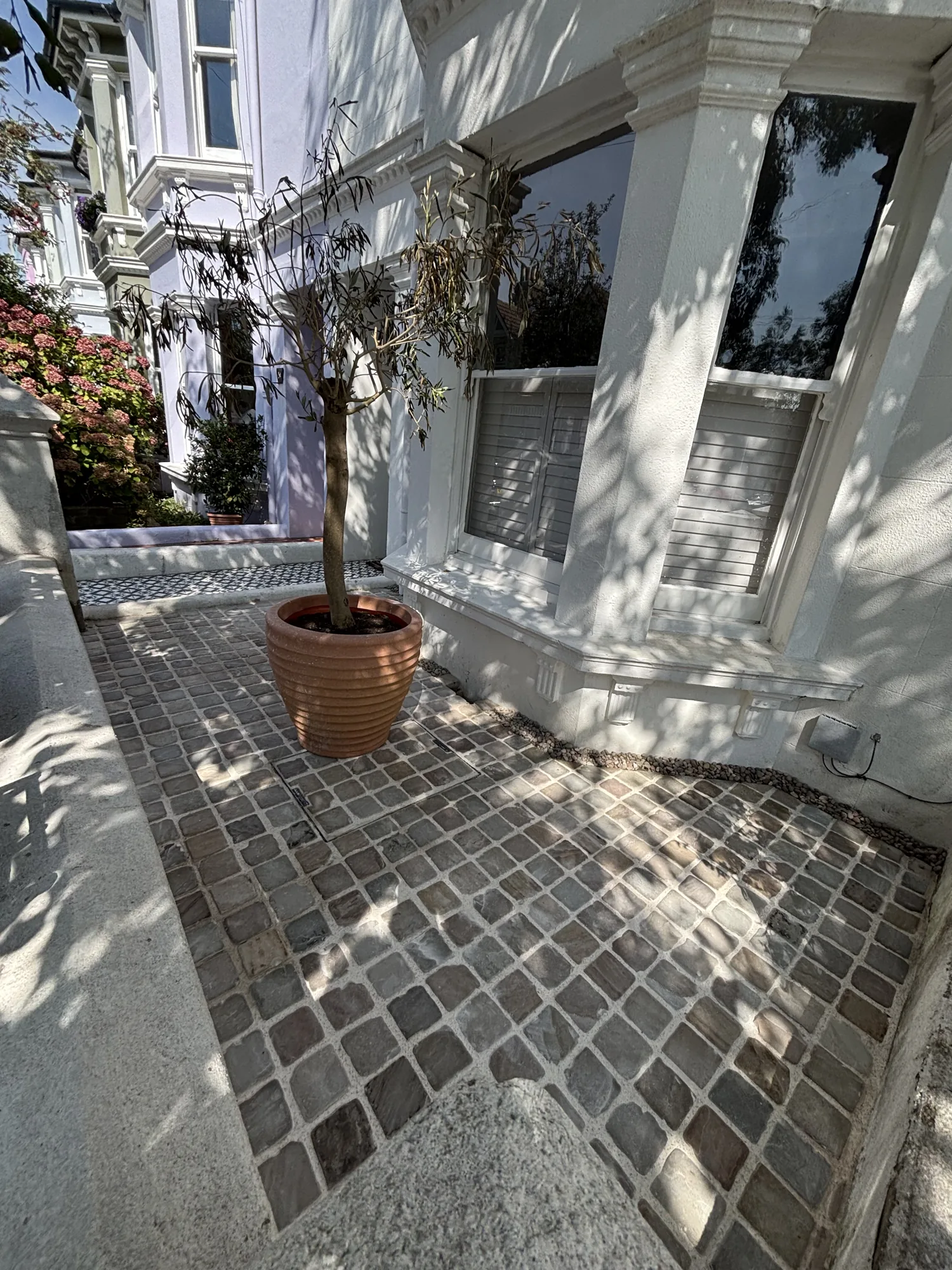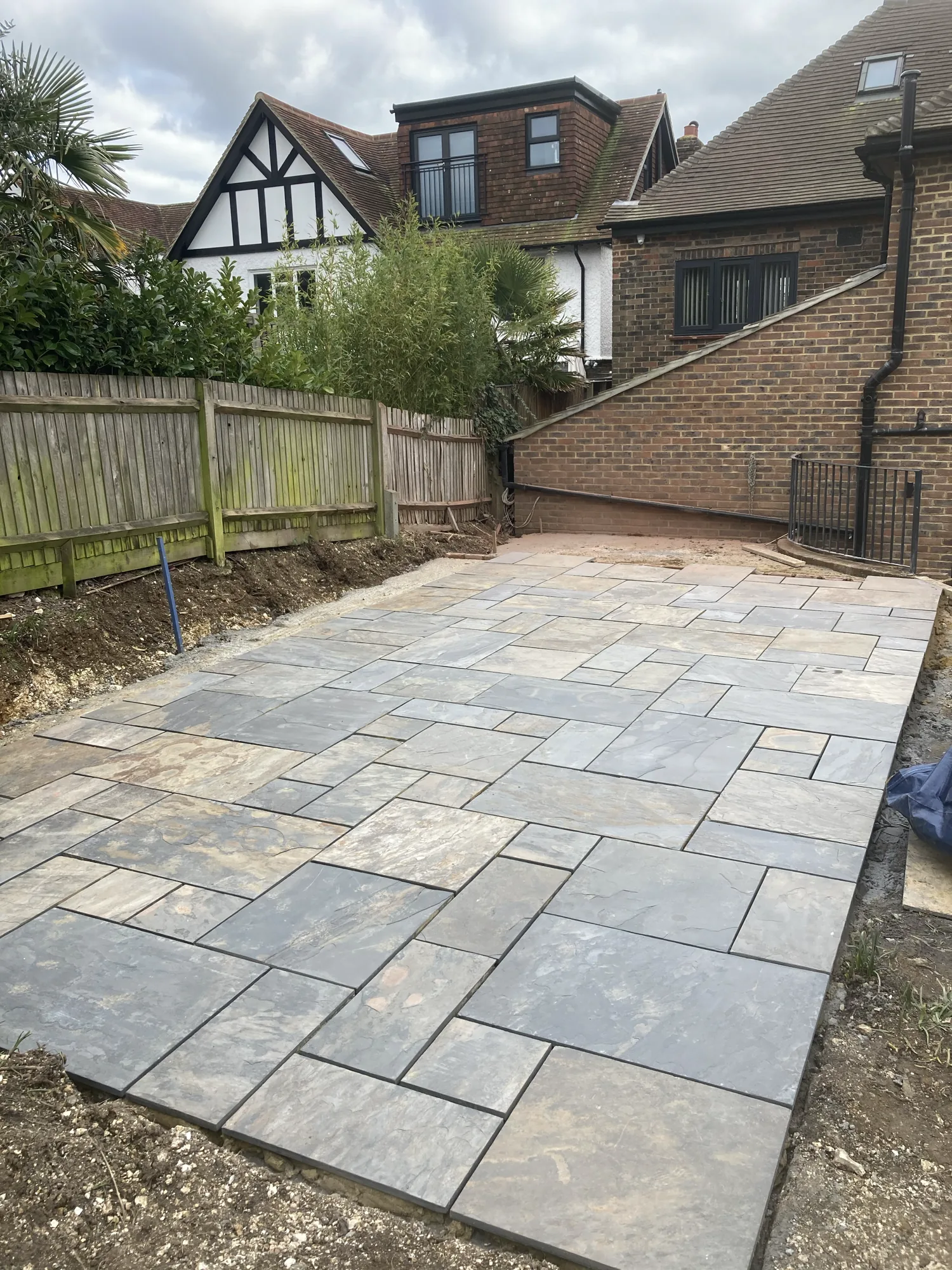
Porcelain paving gives a consistent, contemporary appearance and is relatively low maintenance, while natural stone has more variation and character. Both can make excellent patios, and the right choice depends on the look you want, the property and your budget. Whichever you choose, correct excavation, a proper sub-base and good drainage matter more than the material itself.
A new patio changes how you use your garden. It is where you sit in the sun, entertain friends, and step out from the house on a summer evening. Two of the most popular materials for the job are porcelain and natural stone. Both make excellent patios, and both will last for years when laid properly. They simply offer a different look, a different feel underfoot, and a different level of upkeep. This guide walks you through the differences so you can choose with confidence.
Porcelain or Natural Stone?
There is no single right answer here. Porcelain and natural stone are both first-class choices, and the best one depends on the style of your home, how you want the garden to feel, and how much maintenance you are happy to take on.
- Porcelain gives a clean, contemporary finish with very little upkeep. The tiles are engineered to a consistent size and colour, so the result is neat and uniform.
- Natural stone gives warmth, variation, and character. No two slabs are identical, and the surface softens and mellows with age.
Think of it as a choice between crisp and precise on one hand, and natural and characterful on the other. Neither is better, they are just suited to different gardens and different tastes.
Porcelain Paving
Porcelain is a manmade product fired at high temperatures, which makes it dense, hardwearing, and very stable. It has become a favourite for modern gardens, and it is easy to see why.
- Consistent appearance: Every tile is manufactured to the same size, thickness, and colour. That gives a sharp, contemporary look with tight, even joints, which suits newer homes and clean garden designs.
- Low maintenance: Porcelain is non-porous, so it does not absorb water, stains, or moss the way some materials do. It does not need sealing, and a simple wash keeps it looking as good as the day it was laid.
- Colour consistency: Because the tiles are engineered, the colour stays true and even across the whole patio, and it holds up well against fading in the sun.
- Slip ratings: Outdoor porcelain is made with a textured, slip-rated surface (look for an R11 rating or higher). That keeps it safe underfoot even in wet Sussex weather.
The main thing to know is that porcelain is precise. Its strength is uniformity, so if you want a neat, low-fuss, modern finish, it is hard to beat.
Thinking About a New Patio?
Call Builds by James on 07522 055993. We provide free quotes and honest advice on patios and paving across Brighton and East Sussex.
Call for a Free QuoteNatural Stone Paving
Natural stone is quarried from the ground and cut into slabs, so every piece carries its own colour, grain, and texture. It brings a depth and character that a manufactured product cannot quite copy.
- Variation and character: No two slabs are the same. The natural blend of tones and markings gives a patio warmth and individuality, which works beautifully with period and country-style homes.
- Sandstone: A popular, versatile choice with rich, warm tones. It is easy to work with and suits a wide range of gardens.
- Limestone: A smoother, more even stone with a softer, more contemporary feel while still keeping natural variation.
- Ages naturally: Natural stone mellows over time, developing a lived-in patina that many homeowners love.
- Needs sealing: Because stone is porous, it benefits from sealing to protect against staining and to help resist moss and algae. It is a small task, but one to factor in.
If you want a garden that feels natural, characterful, and rooted in the landscape, stone is a wonderful choice. It simply asks for a little more care than porcelain in return.
Which Is Right for Your Garden
The best way to decide is to weigh up three things: the style of your property, your budget, and how you plan to use the space.
- Property style: Modern homes and clean garden designs often sit best with porcelain, while period and traditional properties are usually complemented by natural stone.
- Budget: Both materials span a range of price points. Porcelain and quality natural stone are broadly comparable, and the right choice for you will depend on the specific product and the area you are paving.
- How the space is used: A busy family patio that sees heavy use and little time for upkeep may lean towards low-maintenance porcelain. A quiet seating area where you want warmth and character may lean towards stone.
You do not have to work this out on your own. We are happy to talk through your garden, show you samples, and help you choose the material that fits your home, your budget, and the way you live.
It Starts Below the Surface
Here is the part that matters most, and the part that is easy to overlook. Whichever material you choose, a patio is only as good as the base beneath it. The finest porcelain or the most beautiful stone will fail if the groundwork below is not done properly.
- Correct excavation: The ground needs to be dug out to the right depth so there is room for a proper sub-base and bedding layer, not just a thin skim over soft ground.
- A solid sub-base: A well-compacted sub-base spreads the load and stops the patio from sinking or moving over time. This is the foundation everything else rests on.
- Drainage: Water needs somewhere to go. Good drainage stops pooling on the surface and protects both the patio and your home from standing water.
- Levels and falls: A patio is laid with a slight, carefully set fall so rainwater runs away from the house rather than towards it. Get the levels right and the surface stays dry, safe, and stable.
These details matter more than the material on top. A patio built on the right base will look good and stay flat and true for years. One laid on a poor base will lift, dip, and crack no matter how good the slabs are. This is exactly the groundwork we take care of on every job.
Frequently Asked Questions
The cost of both materials varies with the specific product, thickness, and finish, and quality porcelain and natural stone are broadly comparable. Porcelain often costs a little more to lay because it needs careful cutting, while natural stone carries the small ongoing cost of sealing. The best way to compare is with a proper quote for your garden, which we provide free of charge.
Both last for decades when they are laid on a proper base. Porcelain is extremely hardwearing and resists staining and fading with almost no upkeep. Natural stone is equally long lived and, with occasional sealing, keeps its character for a lifetime. The single biggest factor in how long any patio lasts is the quality of the groundwork underneath it.
Outdoor porcelain is made with a textured, slip-rated surface designed for exactly this. As long as you choose a proper external grade with a suitable slip rating (R11 or higher), it stays safe underfoot in wet weather. We only use outdoor-rated porcelain for patios, never indoor tiles.
Sometimes, but we always assess the existing base first. Laying new paving straight over an old patio can trap problems underneath, such as poor drainage, cracked slabs, or a base that is already moving. In many cases the honest answer is to lift the old surface and build on a proper sub-base so the new patio lasts. We will tell you what we find and recommend the right approach for your garden.
Yes. Every patio is laid with a slight fall and proper drainage so rainwater runs away from your home rather than pooling on the surface or against the house. Good drainage keeps the patio safe and dry and protects the groundwork beneath it. It is a core part of how we build every patio, not an optional extra.